Market insights
Thailand's EV market in Q3 2026
562,029 battery electric vehicles and rising demand for charging
562,029 battery electric vehicles and rising demand for charging
Thailand’s battery electric vehicle fleet has passed the half-million mark. Department of Land Transport (DLT) figures put the total at 562,029 registered battery electric vehicles (BEVs) as of 30 September 2026, up by more than 70,500 in just three months. For charging operators and site owners, that growth brings a practical question into sharper focus: where will these vehicles charge?
The latest figures show a larger fleet and rising electricity use for charging. They also underline the need to assess public charging provision locally, where demand, access and available capacity can vary considerably.
Thailand had 562,029 registered BEVs at the end of September, compared with 491,496 at the end of June. That represents a net increase of 70,533 vehicles, or 14.4%, during the third quarter.
Including conventional hybrids and plug-in hybrids, the country’s electrified vehicle fleet reached 1,394,043, approximately 3% of the 46.2 million vehicles registered nationwide. These categories have different charging needs. Conventional hybrids do not plug in; plug-in hybrids can use both electricity and fuel; BEVs rely entirely on electricity, supplied through home, workplace, depot or public charging.
| As of 30 September 2026 | Registered vehicles |
|---|---|
| Battery electric vehicles (BEV) | 562,029 |
| Hybrids (HEV) | 734,831 |
| Plug-in hybrids (PHEV) | 97,183 |
| All vehicles in Thailand | 46,172,123 |
At the end of September 2025, Thailand had 330,342 registered BEVs. The September 2026 total was approximately 70% higher. In September alone, 22,589 new BEVs were registered, while electrified vehicles across all categories accounted for 18.2% of new vehicle registrations that month.
The shift is particularly visible among cars, pickups and vans. Of the 552,637 vehicles registered in these categories between January and September 2026, 166,058 were battery electric, according to the DLT. That is approximately 30%, or close to one in three new registrations in these categories.
The Energy Policy and Planning Office (EPPO), part of the Ministry of Energy, reported that electricity used for EV charging rose 87.1% in the first half of 2026 compared with the same period in 2025. Over the twelve months to the end of June, the registered BEV fleet grew by 66%.
These measures cover different aspects of the market: one tracks electricity use over six months, while the other compares fleet size at two points in time. Together, they indicate strong growth in charging activity, but do not establish that every vehicle is being driven more or that all additional demand is reaching public chargers. Vehicle mix, mileage and charging patterns all influence where that demand appears.
The Electric Vehicle Association of Thailand (EVAT) reported 5,021 public charging stations with 15,290 connectors as of 30 September 2026. Of those connectors, 9,753 supported DC fast charging.
Comparing these infrastructure figures with the BEV fleet on the same date gives approximately 37 BEVs per public connector and 58 per DC connector. These are illustrative national averages, not measures of local network coverage.
The vehicle total also includes electric motorcycles, buses and other vehicle types with different charging requirements. A national ratio cannot show whether a particular area has enough compatible chargers, sufficient power or reliable access at busy times. Updated infrastructure figures and local usage data are needed to judge where capacity is falling short.
The IEA’s Global EV Outlook provides international context, including a reported figure of roughly six BEVs per public charging point in China. Differences in reporting dates, vehicle categories and charging-point definitions mean that this should not be treated as a direct like-for-like comparison with Thailand.
Thailand’s national EV policy sets a target of 12,000 DC fast chargers by 2030, alongside the ambition for zero-emission vehicles to account for 30% of domestic vehicle production that year.
The September 2026 count of approximately 9,750 DC connectors provides useful context, although the counting basis should be aligned before measuring progress against the policy target. As the fleet expands, charger numbers alone will not describe the network’s adequacy. Location, power output, reliability and utilisation will also matter.
Thailand’s growing BEV fleet strengthens the case for assessing new charging locations. Fuel stations, shopping centres, restaurants and sites along major routes may offer opportunities where traffic, dwell time and access match drivers’ needs. National growth, however, does not establish demand at every site.
A sound assessment starts with the location: who is likely to charge there, when they arrive, how long they stay and what alternatives are nearby. Grid capacity, connection costs, electricity tariffs and operating costs then determine whether a station can serve that demand profitably. The opportunity is growing; the investment case still needs to be built site by site.
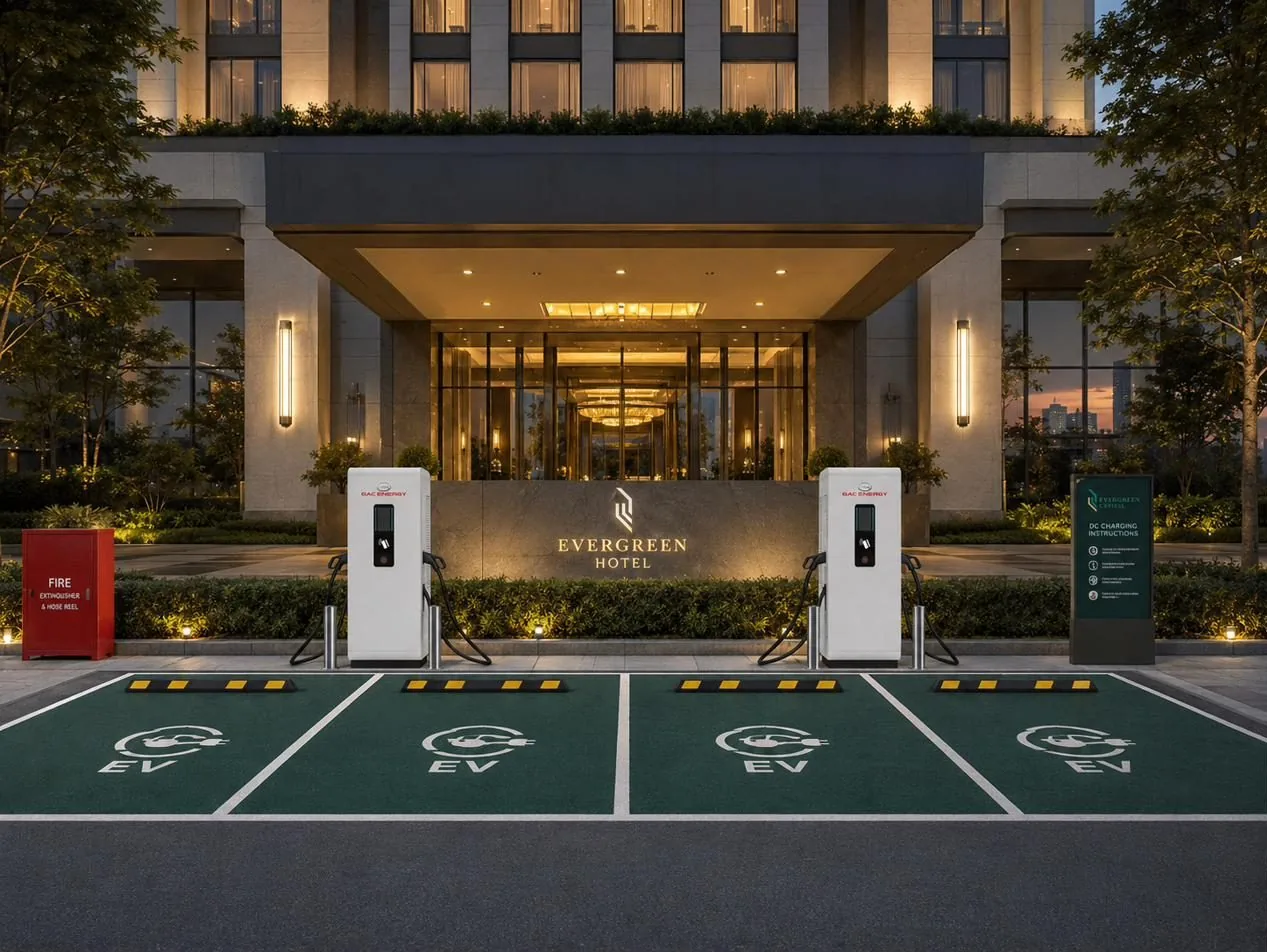
Our no-obligation site assessment reviews location, traffic, parking, electrical capacity, and commercial potential to determine the right project configuration.
Request a Site Assessment